
You are staring at a set of blueprints, a patch of land, or perhaps an old structure that has seen better days. You know you need to get the site ready for what comes next, but the terminology on the quotes and permit applications is starting to blur together. Do you need demolition? Do you need excavation? Or is it a mix of both?
It is a common headache for homeowners and developers alike. Choosing the wrong scope leads to wasted budget and delays that no project manager wants to explain to a stakeholder. We are here to clear the air.
While they often happen sequentially, excavation and demolition are distinct disciplines with different machinery, different safety protocols, and, crucially, different costs. Understanding excavation vs demolition is the first step toward a smooth project launch.
Sometimes, excavation alone is all you need, and knowing the difference matters more than you might think.
Key Takeaways
- Scope Clarity: Demolition removes structures (above or below ground); excavation moves earth and prepares the soil.
- Cost Efficiency: Mislabeling your project can lead to paying demolition rates for standard dirt work.
- Permit Precision: Toronto and GTA municipalities have distinct permitting streams for demolition versus excavation; applying for the wrong one stops work immediately.
- Sequence Matters: You cannot dig a foundation until the subsurface debris is gone, but you shouldn’t pay for demolition if the land is already vacant.
Excavation vs Demolition — What’s the Difference?
Before we dive into the specific scenarios, we need to draw a hard line in the sand (pun intended) regarding definitions. While these two trades often work in tandem, they serve fundamentally different purposes in the lifecycle of a construction site.
What Is Demolition?
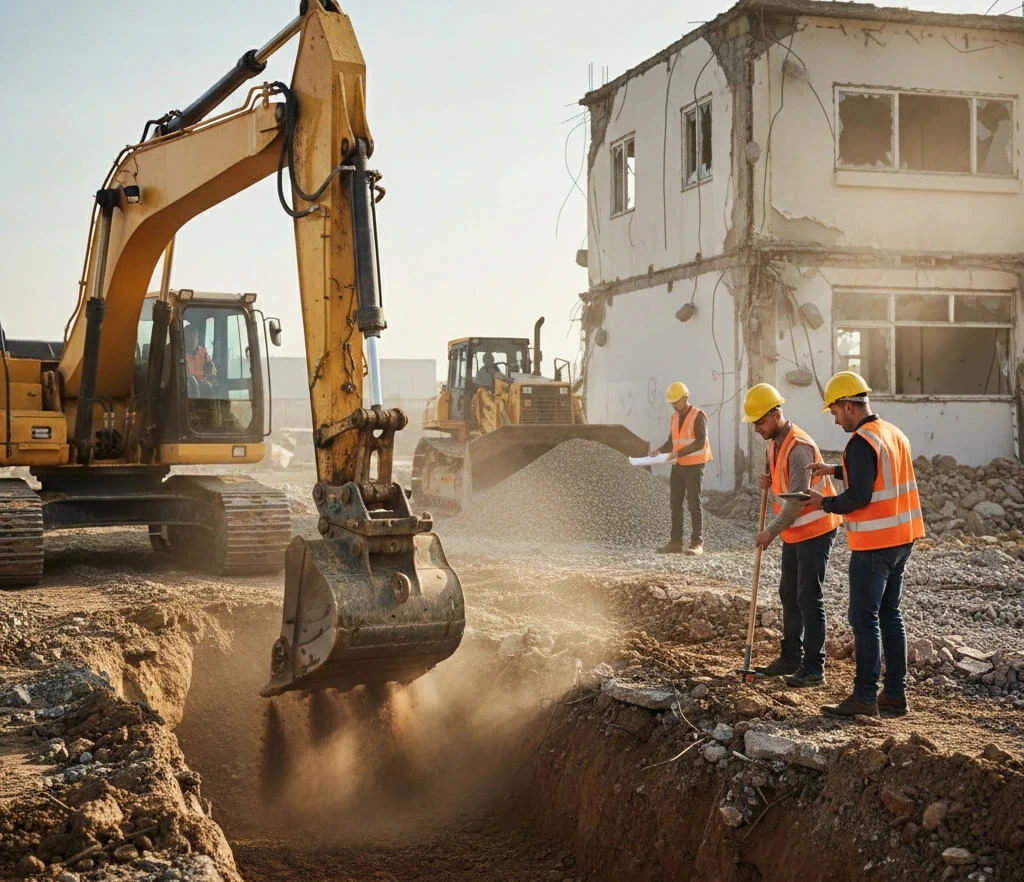
Demolition is the science of deconstruction. It involves dismantling, wrecking, or removing man-made structures. When we talk about demolition, we are looking at:
- Removal of structures (full or partial): This covers everything from a sprawling commercial complex to a backyard garage.
- Mechanical vs selective demolition: This ranges from heavy machinery tearing down a building to careful, hand-tool removal of interior components to preserve the shell.
- Focus on structures above and below grade: This is a key distinction. Demolition isn’t just knocking down walls; it includes ripping out footings, old concrete slabs, and buried tanks.
What Is Excavation?
If demolition is about removing the old, excavation is about preparing for the new. It focuses on the manipulation of the natural environment. Site preparation excavation involves:
- Soil and earth removal: Taking dirt out to create space or changing the topography of the land.
- Trenching, grading, foundation prep: Digging specific utility channels or carving the precise shape for a new basement.
- Focus on ground and subsurface work: The primary materials moved here are earth, rock, and organic matter, not concrete or steel.
When a Project Needs Excavation Only
There is a misconception that every site prep job requires a “demolition phase.” That is simply not true. There are plenty of scenarios where you can skip the wrecking ball entirely and go straight to the dirt work.
New Construction on Vacant Land
This is the cleanest scenario. If you have purchased a raw lot in the GTA that has never been developed, or was cleared decades ago and has returned to a natural state, you are looking at an excavation project.
Since there are no existing structures to remove, the focus shifts immediately to stripping topsoil, grading the lot for drainage, and digging for the new foundation. In this case, hiring dirt work contractors GTA developers trust is your priority, as you don’t need to pay for demolition equipment or expertise that won’t be used.
Foundation Work Without Existing Structures
Sometimes the building stays, but the earth beneath it needs to move. A classic example is basement underpinning. You are not demolishing the house; you are excavating soil from beneath the existing footing to lower the basement floor.
Similarly, if you are building an addition on a lawn, that is an excavation-only scope of work. You are digging a hole for new concrete, not removing old concrete.
Utility Installation or Replacement
When the city mandates a sewer upgrade, or you need to run new water lines to a property, this is pure excavation. It involves cutting trenches, managing soil stability, and backfilling once the pipe is laid. While you might break a small patch of sidewalk (which technically borders on minor demo), the overwhelming scope here is trenching and earth movement.
Grading, Drainage, and Site Levelling Projects
Water is the enemy of any structure. Often, property owners call us not to build or destroy a building, but to fix the land itself. If you are reshaping a backyard to prevent flooding, building a berm, or levelling a slope for a new driveway, this is land clearing vs demolition. It is about managing water flow and soil density, a task that requires an operator skilled in finesse grading rather than brute-force destruction.
Also Read: Excavation Techniques: Choosing the Right Method for Your Project
When Demolition Is Required (With or Without Excavation)
On the flip side, there are times when you absolutely cannot proceed without a demolition permit and a crew that knows how to handle structural tension.
Removing Existing Buildings or Structures
This is the obvious one. If there is a house, garage, shed, or commercial building standing where you want your new project to be, it has to go. This applies to residential excavation Ontario projects that are actually “tear-down and rebuilds.” You cannot excavate the hole for the new house until the old one is safely brought down and hauled away.
Partial Demolition Before Excavation
Renovations are rarely straightforward. You might be keeping the main house but removing an attached garage to dig a deeper foundation for a new living space. Here, you are performing partial demolition (removing slabs, foundations, or retaining walls) before the excavators can start digging the new footprint.
Demolition Followed by Excavation
This is the standard workflow for infill developments in Toronto. The project starts with site prep before construction (Ontario regulations require fencing and disconnects), moves to the demolition of the old bungalow, and then transitions immediately into excavation for the new, larger custom home.
Why the Difference Matters (Cost, Safety, and Permits)
You might be asking yourself, “Why does it matter what we call it if the result is a clear site?”
It matters because in the construction industry, precision is the currency we trade in.
Cost Implications of the Wrong Scope
When you conflate these two services, you risk bleeding budget. If you hire a generalist who classifies a simple dirt dig as a demolition project, you might find yourself paying demolition rates for excavation work. Demolition insurance and equipment rates are often higher due to the inherent risks of collapsing structures.
Conversely, treating a demolition job as a simple excavation results in duplicate mobilization costs. If an excavation crew arrives and realizes there is buried concrete they can’t handle, they have to pack up, and you have to hire a demo crew. You end up paying for mobilization twice.
Timeline and Scheduling Risks
Construction schedules are like dominoes; if one falls the wrong way, the whole line stops.
Rework is the biggest timeline killer. If you schedule excavation but fail to account for the removal of an old septic tank (demolition), work stops until that obstruction is cleared. Worse, delays from incorrect sequencing can push you into winter conditions, where digging frozen ground costs significantly more.
Permit and Inspection Issues
This is where the bureaucracy bites. Excavation vs demolition differences are stark in the eyes of the municipality.
- Demolition Permits: Require utility disconnects, hazmat surveys (asbestos/mould), and hoarding plans.
- Excavation Permits: Focus on shoring, slope stability, and protection of public infrastructure.
If you start digging without a demolition permit and hit a structure, the city can shut down your site instantly. Understanding the boundary ensures you have the right paper in hand before the first bucket hits the ground.
Also Read: Step-by-Step Residential Demolition Checklist: From Planning to Site Cleanup
Excavation-Only vs Demolition + Excavation — Side-by-Side Comparison
To help you visualize the differences, here is how the two scopes compare across key project metrics.
| Feature | Excavation Only | Demolition + Excavation |
| Primary Scope | Removal of soil, rock, and organic matter. | Removal of man-made structures followed by soil removal. |
| Equipment | Excavators with buckets, bulldozers, trenchers. | Excavators with thumbs/breakers/shears, then buckets. |
| Permits | Shoring, Site Alteration, Building (Foundation). | Demolition Permit, Hazmat Clearance, Building Permit. |
| Typical Costs | Driven by volume ($/cubic metre) and disposal fees. | Higher. Includes hazmat abatement, tipping fees for debris. |
| Risk Level | Soil collapse, utility strikes. | Structural collapse, falling debris, hazardous dust. |
| Timeline | Generally faster; depends on depth. | Longer; requires careful teardown before digging can start. |
Common Scenarios That Cause Confusion
There are grey areas that trip up even experienced general contractors. Let’s look at a few scenarios where the line blurs.
“I Just Need the Foundation Removed”
Clients often think, “The house is gone, I just need the concrete out, so it’s excavation.”
Incorrect. Foundation excavation vs demolition is a critical distinction. Removing an existing foundation is demolition. You are breaking up a man-made structure. Excavation is digging the hole; removing the concrete that defines the hole is demolition.
“There’s Nothing Left Above Ground”
You look at a flat field. It looks like an excavation. But what lies beneath? If there are buried oil tanks, old septic systems, or the footings of a barn that burned down in the 90s, you are entering demolition territory. Subsurface structures still count as demolition work because they require breaking and processing material, not just scooping dirt.
“The Building Was Removed Years Ago”
This is a classic “gotcha.” The building was removed, but did they remove the footings? Often, past demolition crews would just knock the building down to grade and bury the rest. When you ask, “When do you need excavation only?”, the answer assumes the soil is clean. If your excavator hits a buried slab from 1950, your excavation project just became a demolition project with a change order attached.
How Professionals Decide the Correct Scope
How do we determine exactly what your site needs? We don’t guess. We follow a rigorous process to define the scope accurately.
Site Assessment and Existing Conditions Review
It starts with walking the land. We look for tell-tale signs of previous structures, changes in vegetation, and ground depressions. A visual inspection often reveals whether we are dealing with a clean cut or a complex removal.
If you are unsure what your land holds, you can request a site assessment to get a professional set of eyes on your project before you commit to a budget.
Utility Locates and Records Review
We check the history. Municipal records often show where old connections were made. If there was a gas line running to the middle of the yard, there was likely a structure there. Utility locates are mandatory, but they are also excellent clues to the site’s history.
Structural and Subsurface Considerations
We analyze the soil reports. Geotechnical engineers can identify “fill” zones where debris might be buried. If the report indicates rubble or non-native soil, we prepare for a hybrid demolition-excavation scope rather than a simple dig.
Also Read: Why Hiring a Professional Demolition Company is Safer Than DIY Demolition
Cost Factors for Excavation vs Demolition
Understanding the cost drivers helps you validate the quotes you receive. Demolition vs excavation cost structures vary significantly.
Excavation Cost Drivers
Soil Type: Sandy soil is easy to dig; the dense clay common in Toronto is harder; Canadian Shield rock is the most expensive.
- Depth: The deeper you go, the more shoring (wall support) you need, which drives up the price.
- Access: Can we get a large machine in, or are we working in a tight downtown alley?
- Disposal: Clean fill is cheaper to dump than contaminated soil.
Demolition Cost Drivers
- Structure Size: Higher buildings require high-reach equipment.
- Materials: Concrete and brick are heavy (expensive to dump) but recyclable. Wood is lighter but voluminous.
- Hazardous Materials: Asbestos or lead paint abatement must happen before the big machines start, adding a separate line item.
- Proximity to Neighbours: taking down a semi-detached home requires surgical precision compared to a farmhouse in a field.
If you have a project in mind and need to run the numbers, you can get an excavation quote that breaks these factors down clearly.
Choosing the Right Contractor Matters
The barrier to entry for buying a shovel is low; the barrier to entry for operating heavy machinery safely in a dense urban environment is high.
Risks of Hiring Excavation-Only Contractors for Demolition Work
If you hire a contractor who only does dirt work to handle a demolition, they likely lack the specialized hydraulic attachments (shears, pulverizers) needed to process concrete and steel efficiently. They might try to “bash” the structure with a bucket, which is dangerous, uncontrolled, and slow.
Benefits of a Contractor That Handles Both
A partner who handles both scopes offers fluidity. If we are excavating and hit an unexpected foundation, we don’t need to call a subcontractor. We switch attachments and keep working. This integrated approach saves time, administrative headaches, and money.
Why MAGCOR Is the Right Partner for Site Prep Decisions
At MAGCOR, we don’t just move dirt and break concrete; we engineer the path for your construction. We understand that in Toronto’s competitive real estate market, time is money and clarity is peace of mind.
Our expertise spans the entire spectrum of site preparation. Whether it is a surgical demolition in a tight neighbourhood or a massive excavation for a commercial basement, we bring the same level of rigorous planning and safety to the site.
By providing accurate scope definition from day one, we help you avoid the “change-order creep” that plagues so many projects. We are one contractor, offering one cohesive schedule, resulting in fewer surprises for you.
From Ground Zero to Ground Breaking
Every great structure begins with a plan, but it relies on the ground beneath it being prepared perfectly. Whether you need to wipe the slate clean with demolition or carve out a future with excavation, the distinction defines your budget, your timeline, and your success.
Don’t let the terminology bury you. Ensure your project starts on solid ground by choosing a partner who sees the full picture.
Speak with a site prep specialist today, and let’s get your project moving in the right direction.
