
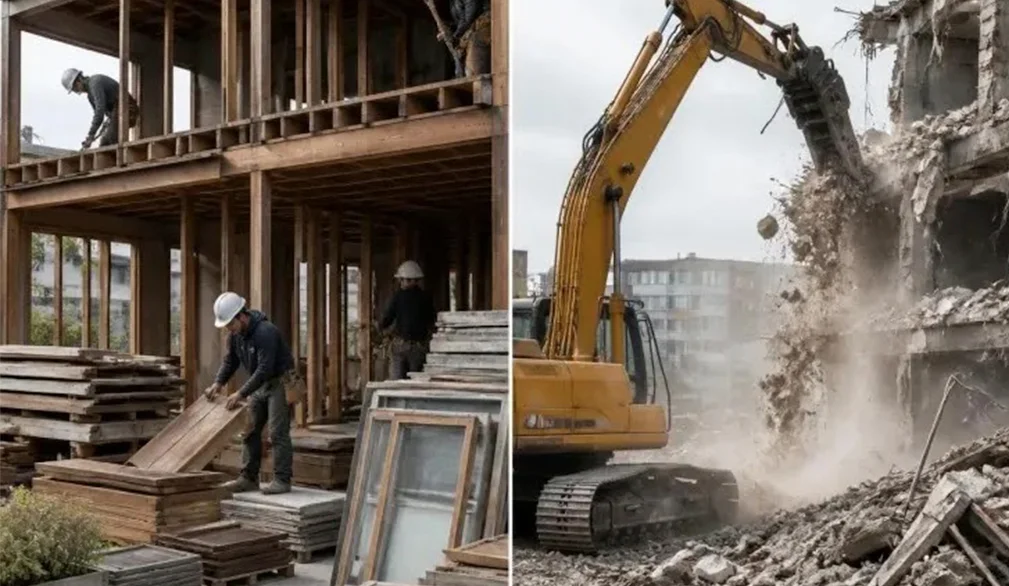
Wandering through older Toronto neighbourhoods, you will likely notice a familiar cycle. Faded properties are making way for modern family homes, and outdated commercial buildings are being replaced by fresh developments. If you own one of these properties, you know that before the exciting building phase begins, the existing structure needs to come down. This early stage can feel stressful. Property owners often assume a traditional wrecking ball is the only option. However, there is another path.
The conversation around removing a building has shifted. Deconstruction has become increasingly popular due to sustainability and waste reduction goals. Unlike a standard teardown, this methodical approach focuses on saving valuable materials. The costs, timelines, labour requirements, and environmental impact differ significantly between the two methods.
Finding your way through the deconstruction vs demolition debate does not have to be overwhelming. We are here to provide a clear comparison to help you choose the right approach for your specific project. By understanding the core differences, you can manage your budget, respect your timeline, and make choices that align with your values.
Key Takeaways
- Method: Demolition uses heavy machinery for rapid removal, while deconstruction involves careful, manual dismantling.
- Budget: Demolition often has lower upfront labour fees, but deconstruction can offer savings through material resale and tax receipts for donated goods.
- Time: A standard teardown takes days. Deconstruction takes weeks.
- Environment: Deconstruction significantly reduces landfill waste, lowering your carbon footprint and supporting the local circular economy.
What Is the Difference Between Deconstruction and Demolition?
Before you break ground, you need to know exactly what you are signing up for. The primary difference boils down to the ultimate goal. Are you clearing the site as fast as possible, or are you trying to salvage the materials that make up the building?
What Is Demolition?
Think of this as the fast track. Traditional demolition involves a fast teardown using heavy machinery like excavators and bulldozers. The primary focus is on rapid site clearing to prepare the land for its next phase. While modern contractors still sort primary recyclables like metal and concrete, the bulk of the materials are typically sent to landfills or local recycling facilities in mixed batches.
What Is Deconstruction?
If demolition is a sprint, deconstruction is a marathon. This is a careful dismantling process done largely by hand. The goal is to salvage reusable building materials. Workers remove doors, windows, flooring, and structural timber piece by piece. With a heavy focus on recycling and sustainability, this method treats the existing building as a resource rather than trash.
Main Differences at a Glance
| Feature | Demolition | Deconstruction |
| Speed | Fast (Days) | Slow (Weeks) |
| Cost | Lower upfront labour, higher disposal fees | Higher upfront labour, savings via salvage |
| Labor | Machine-heavy, smaller crew | Manual labour-intensive, larger crew |
| Waste Generation | High | Minimal |
| Environmental Impact | Moderate to High | Low (Promotes sustainability) |
| Material Recovery | Low (Mostly bulk concrete/metal) | High (Wood, fixtures, brick, glass) |
| Best Use Cases | Unsafe buildings, tight timelines | Historic homes, eco-focused builds |
Speak with our demolition and deconstruction experts to determine the best option for your property.
Deconstruction vs. Demolition Cost Comparison
Budget is often the deciding factor for property owners in the GTA. When comparing deconstruction vs demolition costs, you have to look beyond the initial quote and consider the full financial picture, including local Toronto disposal rates.
Average Demolition Costs
This traditional route usually offers a lower upfront cost. Because heavy machinery requires a smaller crew, you are paying for fewer labour hours. You benefit from faster labour completion, which gets your builders on site sooner. However, disposal fees may increase the total cost. Landfill tipping fees in Ontario are constantly rising, and hauling away tonnes of mixed waste adds up quickly.
Average Deconstruction Costs
Taking a building apart by hand requires significantly higher labour costs. A larger crew will be on your site for a longer period. Yet, you can find potential savings through salvage and recycling. Reclaimed materials can be sold to offset your expenses. Furthermore, donating salvaged goods to local charities can yield tax incentives that may offset expenses in some cases. Is deconstruction cheaper than demolition? Not always upfront, but the financial returns at the end of the project can make the final numbers surprisingly competitive.
Cost Comparison Table
To understand the cost difference between demolition and deconstruction, review how the expenses break down:
| Expense Category | Traditional Demolition | Deconstruction |
| Residential Teardown | $10,000 to $25,000 | $20,000 to $40,000+ |
| Commercial Projects | Varies widely by tonnage | Generally higher labour premiums |
| Disposal Fees | High (Heavy tonnage to landfill) | Low (Most material is diverted) |
| Salvage Value Potential | None to Low | Moderate to High |
| Equipment Costs | High (Excavators, loaders) | Low (Hand tools, smaller lifts) |
Hidden Costs to Consider
No matter which route you choose, there are underlying expenses that can catch you off guard.
- Permit fees: Municipalities require specific permits for removal.
- Hazardous material handling: Older Toronto properties often contain asbestos or lead paint. Safe removal is mandatory and costs extra.
- Waste hauling: Fuel and transport fees for moving debris.
- Sorting and recycling costs: Separating materials at the facility.
- Extended labour timelines: Weather delays or unexpected structural issues can increase labour hours.
Get an accurate estimate based on your property and project goals.
Timeline Comparison: Which Process Takes Longer?
Time is money in real estate development. When planning your build, understanding the demolition vs deconstruction timeline is crucial for scheduling your general contractors.
Typical Demolition Timelines
If you need the lot cleared yesterday, this is your answer. These projects are often completed within days. Once the utilities are disconnected and the permits are cleared, an excavator can bring down a standard residential home in a single afternoon. This allows for faster site preparation for redevelopment.
Typical Deconstruction Timelines
How long does deconstruction take compared to demolition? You should expect the process to take weeks, depending on project size. Because it requires manual material separation and salvage, crews must work systematically. They remove trim, unbolt fixtures, and pull nails from floorboards carefully to preserve the integrity of the materials.
Factors That Affect Project Duration
- Building size: Larger square footage means more time.
- Accessibility: Tight lot lines in downtown Toronto make machinery access difficult, slowing down both methods.
- Material recovery goals: The more you want to save, the longer it takes.
- Permit approvals: Waiting on municipal green lights.
- Environmental inspections: Testing for and removing hazardous materials adds days to the schedule.
Talk to experts about project timelines and site preparation.
Environmental Impact of Deconstruction vs. Demolition
Building removal is inherently messy, but the environmental impact of demolition need not be devastating. As sustainability becomes a core focus in Ontario real estate, understanding your options makes a massive difference.
Landfill Waste Reduction
Construction waste accounts for a massive portion of municipal landfills. Deconstruction can divert substantial material from the landfill, giving your project a greener footprint. By treating the building as a parts warehouse, salvageable materials include wood, metal, fixtures, doors, windows, and flooring. This directly translates into significant demolition waste reduction.
Carbon Footprint & Sustainability
The deconstruction vs demolition environmental impact becomes obvious when you look at the life cycle of building materials. Choosing to salvage leads to a reduced manufacturing demand for new materials. Harvesting old-growth timber from a century-old home means fewer trees are cut down today. You achieve a lower environmental impact through reuse and recycling, directly shrinking your carbon footprint.
Recycling & Circular Economy Benefits
By feeding materials back into the local market, deconstruction supports sustainable construction practices. It encourages responsible material management and strengthens the circular economy. For a deeper dive into how this benefits the industry as a whole, read our guide, “Why demolition leads the way for a greener future.”
Material Recovery Rates
Standard teardowns might recycle concrete and scrap metal, achieving a 20% to 30% diversion rate. Deconstruction waste diversion rates, however, can easily exceed 70% to 80%. These impressive recovery percentages highlight how deconstruction supports LEED construction practices and other green building initiatives.
Reduce landfill waste with a sustainable removal strategy.
What Materials Can Be Salvaged During Deconstruction?
You might walk through an old property and see junk. A trained deconstruction crew sees inventory. The benefits of deconstruction over demolition shine brightest when you uncover the hidden value in your walls.
Common Reusable Materials
- Hardwood flooring: Vintage maple or oak floors are heavily sought after.
- Doors and windows: Solid wood doors and intact architectural windows.
- Cabinets and fixtures: Kitchen cabinets, vintage sinks, and lighting.
- Structural lumber: Century-old joists provide beautiful reclaimed wood for modern timber-frame projects.
- Bricks and metals: Old red brick from Toronto homes is a premium exterior finish, while copper piping yields excellent scrap value.
Materials That Typically Cannot Be Reused
Not everything can be saved. Crews will have to dispose of:
- Damaged drywall: Crumbles and loses structural integrity.
- Mould-contaminated materials: Anything compromised by water damage must go.
- Hazardous materials: Asbestos tiles or lead-painted trim cannot be legally or safely reused.
How Salvaged Materials Create Value
Taking the time to perform selective dismantling pays off. It opens up donation opportunities, allowing you to give materials to housing charities. There is also strong resale potential for reclaimed wood and vintage fixtures. Ultimately, keeping these heavy materials out of the bin leads to vastly reduced disposal fees.
Find out how much material from your property can be reused or recycled.
When Is Demolition the Better Option?
While saving materials is wonderful, traditional teardowns exist for a reason. Sometimes, bringing in the heavy machinery is the smartest business decision. If you are unsure which path to take, explore our resource on the Types of Demolition: Which One is Right for Your Project?.
Severe Structural Damage
If a building has suffered a severe fire or a collapsed roof, sending workers inside to dismantle it by hand is too dangerous.
Tight Construction Timelines
When your general contractor is booked to pour a new foundation next week, you do not have three weeks to spare for a manual takedown.
Unsafe or Hazardous Buildings
Properties flooded with black mould or heavily laden with asbestos require swift, safe, and controlled disposal, rather than careful preservation.
Limited Salvage Potential
A cheaply built commercial plaza from the 1980s might simply lack valuable materials. If there is no reclaimed wood or historic brick to save, a standard teardown is far more practical and cost-effective.
When Is Deconstruction the Better Option?
Conversely, there are specific scenarios where rushing with an excavator means throwing money and history straight into the dumpster.
Sustainability-Focused Projects
If you are aiming for LEED certification or simply want an eco-friendly build, deconstruction environmental benefits align perfectly with your vision.
Historic or Character Buildings
Toronto is full of historic architecture. Tearing down a Victorian home in The Annex with a bulldozer destroys valuable heritage materials that a manual takedown can preserve.
Projects With Valuable Salvageable Materials
If your property is filled with old-growth timber, intricate masonry, or custom millwork, the resale value justifies the extra labour time.
Clients Seeking Waste Reduction Goals
For institutions, municipalities, or corporate developers looking to meet strict corporate social responsibility quotas, sustainable demolition methods are non-negotiable.
Factors That Affect Deconstruction & Demolition Costs
Every project site in the GTA is unique. When our team assesses a property, we look at several variables that influence the final quote.
Building Size
The total square footage dictates the volume of waste and the hours required for the crew.
Material Type
Taking apart a brick-and-beam warehouse requires different techniques than removing a standard wood-framed residential bungalow.
Accessibility
Can we park a waste bin in the driveway? Can an excavator safely navigate between two neighbouring houses? Tight access increases manual labour, elevating costs.
Equipment Requirements
Will we need standard hand tools, skid steers, or massive long-reach excavators?
Hazardous Materials
Discovering asbestos means bringing in specialized abatement teams before the primary removal can even begin.
Local Disposal Fees
Tipping fees at Ontario transfer stations fluctuate. The heavier the waste, the more you pay.
Labor Requirements
Union rates, crew size, and the technical skills required for selective dismantling all play a role in the budget.
Understand your project cost with a professional site assessment.
Why More Property Owners Are Choosing Sustainable Deconstruction
The shift away from traditional wrecking ball tactics is not just a passing trend. It is a fundamental change in how we approach real estate development.
Increased Environmental Awareness
Developers and homeowners alike are recognizing the strain that construction waste places on our environment. They want to be part of the solution, not the problem.
Construction Waste Regulations
Municipalities are tightening their bylaws. With stricter limits on what can be sent to landfills, diverting waste is becoming a regulatory necessity.
Material Recycling Initiatives
The infrastructure for recycling building materials has vastly improved. We now have dedicated facilities capable of efficiently processing and redistributing salvaged goods.
Long-Term Sustainability Benefits
Adopting these practices elevates property values, satisfies eco-conscious investors, and ensures we are leaving a healthier environment for the next generation.
How to Choose the Right Contractor for Deconstruction or Demolition
Your project is only as successful as the team you hire. This is a major structural operation, and you need professionals who know what they are doing.
Experience & Certifications
Look for a company with a proven track record in both methods. They should be fully licensed, insured, and, if necessary, certified for hazardous material handling.
Safety Procedures
Ask about their safety protocols. Proper site securing, utility disconnection, and worker protection must be their top priority.
Waste Management Practices
A good contractor knows exactly where the debris is going. They should have established relationships with local recycling facilities.
Transparent Pricing
Avoid companies that give vague estimates. You deserve a clear, itemized breakdown of labour, disposal, and equipment fees.
Recycling & Salvage Capabilities
If you want to deconstruct, ensure the contractor has actual experience in selective dismantling and knows how to carefully extract materials without destroying them.
Rebuilding Tomorrow: Wrapping Up Your Removal Strategy
Clearing a lot is the crucial first step toward bringing your new vision to life. Whether you choose the speed and efficiency of traditional demolition or the sustainable, meticulous approach of deconstruction, the decision ultimately rests on your project’s unique demands. Demolition offers a rapid turnaround and lower initial labour costs, making it ideal for tight schedules and standard teardowns. On the flip side, deconstruction shines by rescuing valuable materials, drastically reducing landfill waste, and lowering your environmental impact, even if it requires a longer timeline. By weighing your budget, timeline, and sustainability goals, you can confidently set the stage for a successful build.
Why Choose MAGCOR for Deconstruction & Demolition Services
At MAGCOR, we understand that tearing down a building is just the beginning of your property’s next chapter. We are experienced demolition and deconstruction professionals who serve the Greater Toronto Area with pride. Whether you are a homeowner preparing for a custom build or a developer clearing a commercial lot, we deliver safe and efficient project execution tailored to your specific needs.
We don’t just knock things down; we think ahead. Our sustainable waste management practices ensure we divert as much material as possible from the landfill, balancing your budget and protecting the environment. You will always know what to expect thanks to our transparent project planning and pricing. With deep experience in residential and commercial projects, we take the stress out of site preparation. Partner with a team that shares your commitment to environmental responsibility and precision. Let’s clear the way for something great.
Interested in learning which removal method best suits your property? Speak to our team and request a project estimate for deconstruction or demolition.
