
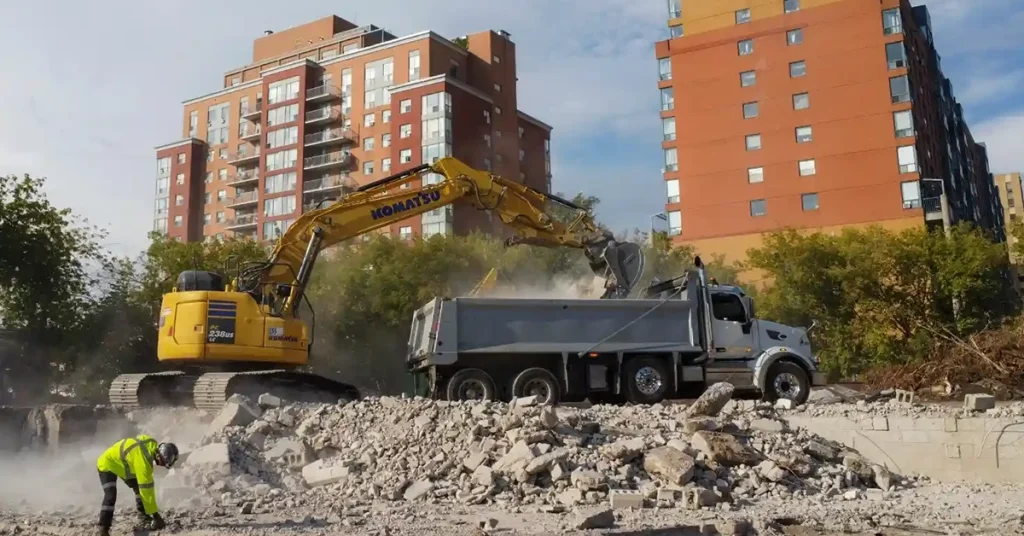
Demolition might happen strictly within the boundaries of a single lot, but its effects have a funny way of ignoring property lines. Tearing down a structure is a massive undertaking. Nearby homes, local businesses, shared driveways, boundary fences, delicate foundations, underground utilities, manicured landscaping and public access routes can all feel the impact if the project is not meticulously planned from day one. You might be wondering exactly how demolition affects neighbouring properties and how to mitigate risks before the excavators even arrive. It is a smart question to ask. A teardown can generate significant dust, intrusive noise, ground vibration, flying debris, site access challenges, sudden drainage issues, local traffic disruption, neighbour complaints and the very real risk of property damage, so it’s a lot more than just getting some equipment and starting to tear down.
The good news is that many neighbouring property risks can be significantly reduced through careful site assessment, thorough condition documentation, securing the right permits, strict site controls, proactive communication and professional demolition planning. Tearing down a building does not have to mean tearing apart your relationship with the community. This guide will explain the most common ways demolition affects neighbouring properties, how those frustrating risks actually happen and what practical steps can be taken to reduce problems long before the actual work begins.
Key Takeaways
- Understand the primary risks: Demolition affects neighbouring properties through dust migration, ground vibration, loud noise, flying debris, and heavy traffic disruption.
- Prioritize hazards and utilities: Always assess older buildings for hidden hazards, such as asbestos, and confirm all utility disconnections before any teardown begins.
- Implement strict site controls: Using active demolition dust control, sturdy safety fencing, and planned equipment access helps effectively mitigate the risk of property damage.
- Document conditions and communicate: Taking dated photos of adjacent structures and openly sharing project timelines helps avoid unnecessary neighbour disputes.
- Hire a professional team: A qualified Ontario demolition contractor safely manages complex local permits, vibration monitoring, safety protocols and thorough site cleanup.
Why Demolition Can Affect Nearby Properties
It is easy to look at a house or commercial building and view it as a standalone object. However, demolition involves far more than simply removing a structure from a plot of dirt. It fundamentally changes the immediate environment around a property, especially in densely packed neighbourhoods, tight, narrow lots, busy commercial plazas and older urban areas. Buildings in these settings are often intimately connected to their surroundings.
When you start pulling a structure down, several common impact areas come into play. Shared walls in semi-detached units require delicate separation. Adjacent foundations might suddenly lose the lateral support they relied on for decades. Shared driveways, wooden fences, delicate landscaping, public sidewalks, vital utilities, neighbouring roofs, parked vehicles, fragile windows, exterior siding finishes and nearby tenants or occupants all sit squarely in the impact zone. Professional planning is especially crucial in Toronto, the Greater Toronto Area and older Ontario neighbourhoods where historic homes or commercial buildings often sit uncomfortably close together. Taking the time to map out these relationships is the first step in safe demolition practices.
Risk #1: Dust Spreading to Neighbouring Homes or Businesses
Why Demolition Dust Is a Problem
Have you ever noticed how quickly a thin layer of grit can coat a freshly washed car? Now imagine the volume of dust generated by tearing down an entire building. Demolition dust is rarely a localized issue. It can easily travel well beyond the immediate worksite and settle stubbornly on nearby windows, parked cars, blooming landscaping, backyard patios, vulnerable HVAC intakes, commercial storefronts and patio furniture. Beyond being a simple nuisance, this airborne material can be a genuine hazard. Older buildings frequently contain hidden materials that require careful assessment before any disturbance occurs. Materials like asbestos, lead paint, harmful mould, and other hazardous substances must be identified early to ensure they do not contribute to the neighbourhood’s air quality.
How to Mitigate Dust Risks
Learning how to reduce dust during demolition is a top priority for any conscientious property owner. Mitigation starts with comprehensive pre-demolition hazardous-material surveys to identify any dangerous elements hiding in the walls. From there, a robust dust-suppression plan is implemented. This often includes strategic water misting to weigh down airborne particles where appropriate. Installing strong containment barriers and secure site fencing keeps the bulk of the mess contained. Using covered bins or specialized debris containers prevents wind from whipping up settled dust. Controlled debris handling, combined with rigorous cleanup routines during and after the project, makes a massive difference. Simply avoiding unnecessary material disturbance goes a long way in keeping the air clear.
Reduce demolition mess with proper containment and site controls.
Risk #2: Vibration and Structural Movement
How Vibration Can Affect Nearby Properties
Heavy machinery doing heavy work is going to shake the ground. Demolition equipment, active concrete breaking, rolling heavy machinery and aggressive structural removal naturally create substantial ground vibration. While modern buildings might shrug this off, nearby foundations, historic masonry, brittle drywall, fragile plaster walls, aging retaining walls or older structures may be exceptionally sensitive to even minor earth movement. Understanding the risks of demolition vibration damage is vital when working in historic or tightly packed districts.
Warning Signs Neighbours May Notice
When vibration travels through the soil, adjacent property owners might start spotting worrying signs. Neighbours may notice new, jagged cracks forming in their walls or ceilings. They might suddenly find themselves dealing with sticking doors or windows that worked perfectly the day before. Loose exterior masonry, subtle movement around their own foundations, cracked exterior stucco finishes and visibly shifting fences or retaining walls are all clear indicators that site vibrations are reaching beyond the property lines.
How to Mitigate Vibration Risk
Wondering how to reduce vibration during demolition? It requires a blend of strategy and finesse. We strongly recommend comprehensive pre-demolition property-condition documentation to establish a clear baseline. Bringing in an engineer for a structural review is wise when dealing with known sensitive environments. A professional crew will use controlled demolition sequencing, essentially taking the building apart in a way that minimizes heavy, sudden impacts. Selecting the appropriate equipment for the specific terrain and avoiding unnecessary impact methods protects the local soil stability. Monitoring sensitive structures throughout the process and maintaining clear, honest communication with adjacent property owners helps nip potential panic in the bud.
Also Read: What Happens to Demolition Waste? Recycling, Disposal & Reuse Explained
Risk #3: Debris, Falling Materials and Property Damage
What Can Go Wrong
Gravity is an unforgiving force during a teardown. Falling materials, tumbling loose debris, shattered broken glass, heavy brick, jagged concrete, splintered wood or twisting metal can easily damage neighbouring exterior walls, wooden fences, parked cars, paved walkways, carefully tended gardens, vulnerable windows or adjacent roofs if the site is not expertly controlled. People often ask what happens if demolition damages a neighbour’s property. The short answer is that it leads to stressful insurance claims, halted timelines and soured community relationships.
How Professionals Reduce Debris Risks
Professional crews view debris management as an active, ongoing task rather than a final cleanup chore. They reduce demolition risks to nearby properties by erecting tall, sturdy site fencing and deploying robust safety barriers to catch rogue materials. They follow a strictly controlled removal sequence to ensure walls fall inward, not outward. Using enclosed waste chutes or strategically placed bins where appropriate keeps the mess localized. Active debris sorting on-site, establishing protected access routes, and consciously keeping loose materials far away from shared property lines are standard practices. Regular, systematic site cleanup and safe loading and hauling practices ensure that debris leaves the site cleanly and safely.
Risk #4: Noise Disruption for Neighbours
Why Demolition Noise Matters
It is no secret that tearing down a house is a loud affair. Demolition noise can deeply affect nearby residential households, operating businesses, daytime tenants, local schools, quiet health clinics and busy corporate offices. The sheer volume can be overwhelming. Noise typically emanates from rumbling heavy equipment, aggressive concrete breaking, idling transport trucks, dropping metal bins, noisy material sorting and continuous loading operations. Ignoring how demolition affects neighbours through noise is a quick way to generate formal complaints.
How to Reduce Noise Complaints
While you cannot silence a bulldozer, effective demolition noise control is entirely possible. It starts with strictly following all municipal noise rules and local bylaws. Scheduling the most disruptive work exclusively during permitted, reasonable hours shows basic respect for the community. Giving neighbours plenty of advance notice allows them to plan their day around the peak noise periods. Using the right, modern equipment tailored for the specific scope of work reduces unnecessary grinding and banging. Avoiding unnecessary engine idling, purposefully planning louder work during standard midday windows and keeping the lines of communication open with nearby occupants can turn a potential noise dispute into a manageable temporary inconvenience.
Risk #5: Utility Disruption and Service-Line Damage
Why Utility Planning Matters
Underneath the grass and concrete lies a complex web of crucial infrastructure. Demolition can severely affect pressurized gas mains, high-voltage hydro lines, pressurized water pipes, vital sewer connections, delicate telecom wires and community drainage lines if they are not accurately identified and properly disconnected. In many urban environments, some utilities may run dangerously close to shared property lines or even directly serve neighbouring buildings. Cutting the wrong line does not just stop your project; it can shut down the whole block.
How to Mitigate Utility Risks
Proactive utility management is a non-negotiable step in demolition safety planning. You must definitely confirm all utility locations before any demolition equipment fires up. It is vital to coordinate formal utility disconnections and always get written confirmation where required by local authorities. Taking physical steps to protect nearby, active service lines from heavy equipment traffic is essential. Crews must avoid digging or breaking ground concrete without a clear map of what lies below. Carefully planning the excavation and demolition sequencing and using qualified professionals for complex, overlapping utility conditions keep the lights on and the water flowing for everyone else on the street.
Risk #6: Access, Parking and Traffic Issues
How Demolition Can Disrupt Access
A busy demolition site is a hub of logistical activity. A standard project may require massive roll-off bins, wide transport trucks, bulky heavy equipment, perimeter fencing and dedicated delivery routes. All of this necessary infrastructure can easily affect neighbouring driveways, block public sidewalks, consume scarce street parking spaces, clog narrow urban laneways, obstruct commercial loading areas or block business entrances.
How to Reduce Access Problems
Logistical headaches are preventable. We recommend thoroughly planning heavy equipment access long before the actual work begins. Consciously keeping shared driveways and emergency exits clear where possible is just good manners. Notifying neighbours well in advance of any temporary street disruptions helps them adjust their daily commute. Coordinating precise bin placement so it does not block sightlines, using highly visible signage and safety barriers, and keeping public pedestrian walkways completely safe are industry standards. Planning commercial haulage routes carefully and strictly avoiding unnecessary obstructions on roads or laneways keeps local traffic flowing and the neighbours relatively happy.
Risk #7: Drainage, Soil and Site-Stability Issues
Why Ground Conditions Matter
Demolition is not just about the building; it is about the ground it sits on. Tearing out a deep foundation and running heavy excavation equipment can permanently affect local land grading, alter established drainage paths, disrupt natural soil stability and leave expansive exposed foundation areas vulnerable to the elements. If not actively managed, heavy rainfall may suddenly flow directly toward neighbouring properties, or unstable, vibrating soil may cause adjacent paved surfaces to sink or crack.
How to Mitigate Drainage and Soil Risks
Managing the earth is just as important as managing the structure. Mitigation includes carefully reviewing current land grading and drainage patterns before work begins. Actively managing stormwater during the demolition phase prevents muddy runoff from crossing property lines. Implementing physical barriers to prevent loose site debris from entering and clogging municipal storm drains is crucial. Crews must proactively stabilize exposed soil where needed, especially near property boundaries. Protecting neighbouring residential landscaping and hardscaping from heavy machinery tracks, executing proper backfilling procedures, planning thorough site cleanup after demolition and coordinating all excavation work seamlessly with the overarching demolition plan ensures the ground remains solid.
Risk #8: Neighbour Disputes and Communication Problems
Why Communication Matters
People fear the unknown. Neighbours are usually much more understanding and accommodating when they actually know what is happening, exactly when it will happen and precisely who to contact if they have urgent concerns. A total lack of communication can easily turn standard, manageable project disruption into bitter complaints, bylaw calls or stressful legal disputes. Figuring out how to avoid neighbour disputes during demolition is largely a matter of proactive public relations.
What to Communicate Before Demolition
Open dialogue clears the air. Before the heavy machinery arrives, make sure to share the approximate start date and the expected overall project duration. Be transparent about the daily work hours. Clearly outline the specific physical areas that may be temporarily affected by trucks or fencing. Set realistic expectations for noise or dust so they are not caught off guard. Detail any temporary changes to parking or community access. Most importantly, provide a direct, reliable contact person they can call for concerns, along with a gentle reminder that the work is being handled professionally and safely.
What Not to Promise
While being friendly is great, overpromising is dangerous. You should never promise zero noise, zero dust or absolutely no disruption. Construction reality simply does not work that way. Instead, frame your communication honestly. Use realistic language. Tell them you will reduce dust, limit the loudest noises to certain hours, actively manage site traffic, help prevent loose debris from crossing lines, and minimize overall disruptions where possible. Honesty builds immediate trust.
Pre-Demolition Property Documentation: Why It Matters
Memories are notoriously unreliable, especially when property damage is suspected. Documenting existing conditions before demolition creates a highly useful, objective record for both the property owner and the neighbouring property owners. It officially records pre-existing cracks, leaning fences, stained driveways, weathering exterior walls, overgrown landscaping, leaning retaining walls and the baseline state of nearby structures before any work begins.
Essential steps for property documentation:
Take well-lit, clearly dated photos of all nearby structures from multiple angles. Meticulously document any pre-existing foundation or wall cracks on adjacent buildings. Note the current structural condition of shared boundary fences and garden retaining walls. Photograph the current state of shared driveways, public sidewalks and delicate property-line landscaping. Review and record any known adjacent-foundation concerns. Keep all approved permit documents and official inspection records carefully filed. Keep written communication notes or emails shared with neighbours. Save all contractor scope details and comprehensive safety-plan documents in a secure project folder.
Permits, Approvals and Local Requirements
Bureaucracy exists for a reason, especially when it comes to community safety. Demolition permits and municipal requirements can vary widely by city, property type, and overall project scope. While we cannot provide definitive legal advice for your specific address, it is a fact that formal permits, municipal inspections, official utility disconnections and thorough hazardous-material assessments may be legally required before a single wall comes down. Navigating demolition permits in Ontario is a critical early step.
It is also wise to avoid making definitive legal or insurance assumptions about who is responsible for damage to neighbouring property without consulting an expert. Liability always depends on the specific circumstances, signed contracts, active insurance coverage and applicable provincial laws; always seek professional legal or insurance advice where needed.
Standard requirements often include securing formal building or demolition permits and submitting detailed site plans to the city. You will need authorized utility-disconnect confirmations and verified hazardous-material surveys. Strict tree-protection or environmental considerations apply if the lot features mature greenery or is near waterways. Approved waste-disposal plans, ongoing municipal inspection records and specific neighbouring-property considerations for close-lot projects are all standard hurdles in a legal demolition project.
How Professional Demolition Contractors Mitigate Neighbouring-Property Risks
Tackling a teardown alone is a recipe for disaster. A professional demolition contractor in Ontario helps manage the full, complex risk picture long before the physical work begins. This comprehensive approach includes detailed strategic planning, securing necessary permits, mapping out safe sequencing, selecting the right heavy equipment, implementing strict dust control, installing secure fencing, managing safe debris handling, coordinating utilities, maintaining daily cleanup, and handling difficult communication.
How the pros keep sites secure:
They conduct a thorough physical site assessment before demolition is ever scheduled. They handle the complex hazardous-material review and abatement process. They take over the frustrating utility-disconnection planning and bureaucratic follow-up. They map out safe-access planning for heavy transport vehicles. They deploy active dust and debris control systems daily. They ensure precise equipment selection to match the lot’s constraints. They utilize controlled demolition sequencing to direct the building inward. They manage the heavy lifting of waste sorting and environmental hauling. They can even assist with polite communication with neighbouring property owners. Finally, they guarantee a thorough final cleanup and proper closing documentation.
Neighbouring-Property Risk-Mitigation Checklist
Staying organized is your best defence against a chaotic project. Use this practical demolition safety checklist for homeowners to ensure all bases are covered. Before starting demolition, property owners should confirm:
- The demolition scope is clearly defined and agreed upon.
- Permit requirements have been thoroughly reviewed and legally secured.
- Underground and overhead utilities are identified and disconnected where required.
- Hazardous-material surveys are properly completed where needed.
- Nearby property baseline conditions are documented with dated photographs.
- Protective site fencing and clear safety signage are planned and scheduled.
- Active dust-suppression measures are included in the daily workflow.
- Secure debris containment strategies are included in the site plan.
- Heavy equipment access and truck routing have been planned out.
- Immediate neighbours are politely notified where appropriate.
- Eco-friendly waste disposal and material recycling are planned.
- Daily and final cleanup responsibilities are clear to all workers.
- Final project documents will be securely kept for future reference.
When Should You Call a Demolition Professional?
Call Before You Apply for Permits
Do not wait until you are drowning in municipal paperwork. Early professional guidance can help quickly clarify the actual demolition scope, outline exact permit requirements, plan for tricky site access, identify hazardous-material concerns, and address neighbouring-property risks before expensive bureaucratic delays occur.
Call If the Property Is Close to Other Buildings
Tight spaces require expert hands. You should immediately call a pro if you are dealing with semi-detached homes, narrow urban lots, attached commercial structures, shared residential driveways, tight city laneways, busy commercial plazas, multi-unit buildings or dense residential neighbourhoods.
Call If There Are Structural or Hazardous-Material Concerns
Never guess when it comes to structural integrity or toxic materials. Bring in an expert if you are working with century-old buildings, suspected asbestos, flaking lead paint, extensive black mould, visible foundation cracks, severe water damage, leaning or unstable structures, recent fire damage, or unknown or hidden wall and ceiling materials.
Call If You Want to Avoid Neighbour Disputes
Peace of mind is worth the investment. Professional planning, thorough condition documentation, rigorous physical site controls, and polite, clear communication can significantly reduce neighbourhood misunderstandings, stop complaints early, and fiercely protect your valuable project timeline.
Why Choose MAGCOR for Demolition Projects in Ontario
When the stakes are high, experience matters. MAGCOR helps concerned homeowners, ambitious property owners, busy contractors and visionary developers plan complex demolition projects with an unwavering focus on site safety, municipal compliance, clear communication and tightly controlled execution. Managing demolition near neighbouring properties requires much more than just parking heavy equipment on a lawn. It requires detailed preliminary site assessment, incredibly careful structural sequencing, strict utility coordination, rigorous dust and debris control, eco-conscious waste planning and a deep attention to the safety of nearby structures.
Our dedicated team can help clients fully understand their unique project scope, actively reduce preventable job-site risks, cleverly plan around sensitive neighbouring properties, coordinate with the right local professionals and complete the dirty demolition work with a steadfast attention to property protection and immaculate site cleanup. Whether your upcoming project involves precise residential demolition services, large-scale commercial demolition services, surgical interior demolition or a comprehensive, down-to-the-dirt full teardown, MAGCOR provides the expert guidance and heavy technical support needed to move your development forward confidently. We solve the logistical problems so you can focus on building the future.
Clearing the Way Without Creating Neighbouring-Property Problems
Taking down a building is the first thrilling step in a new build, but it requires respect for the surrounding space. To recap, demolition can easily affect neighbouring properties through migrating dust, shaking vibration, loud noise, flying debris, frustrating access issues and dangerous utility risks. However, many of these risks can be significantly reduced with proper early planning, securing the right permits, conducting thorough surveys, utilizing strong site controls, and relying on professional execution.
Simple, honest neighbour communication helps prevent neighbourhood confusion and bitter disputes. Comprehensive property documentation creates a highly useful, protective record of existing site conditions before any heavy work begins. Ultimately, choosing the right, experienced demolition contractor helps keep your entire project safely controlled from the first day of planning all the way through to the final sweeping cleanup.
Call today to book a site assessment and request a free demolition quote.
